Friday, April 8, 2011

Genetics video


Today we watched a video on genetics. We took notes on the video. He is going to collect the notes.

  • We inherit genetic material from our parents.

  • A monk name Gregor Mendel created experiment to figure out how this happened.

  • He did an experiment using peas like our pea soup simulation.

  • Each parent contributes one factor.

  • the factors are genes.

  • they can tell what the offspring might look like, but they can also pass some diseases.

  • Morgan started working with fruit flies to experiment.

  • Morgan took a fruit fly with red eyes and one with white eyes.

  • The offspring had red eyes.

  • All of the flies with white eyes where male.

  • Gender is determined by chromosomes.

  • Morgan found out that the eyes and x chromosomes had some relationship.

  • diseases are caused by problems with genes.

  • George Beetle worked with Morgan.

  • Beetle took bread mold and experimented with it.

  • Beetle aerated the chromosomes and the mold didn't grow.

  • When Beetle added the nutrients the mold started to grow again.

  • This showed that genes did more that give the characteristics to offspring.

  • Barbara Miclintok was a scientist.

  • Miclintok researched the genetics of maize.

  • The color showed where the break in the chromosomes occurred.

  • The color would show up in different parts of corn.

  • Transposons are in all different things.

  • Miclintok's work was ignored.

  • Alford Hershey and Martha Chase found out whether it was the protein in the bacteria or DNA that caused viruses.

  • They found out that it was DNA.

  • James Watson were finding out about DNA.

  • He made a 3-D version of DNA.

  • He got a a x-ray of the DNA and finished the structure.

  • They found out that it was a double helix.

  • People knew that DNA made protein.

  • Scientists found that cells with lots of protein had lots of RNA.

  • Scientists found out that mRNA translated instructions from DNA and made protein.

  • They found out that when they where aligned with triplets it made proteins.

  • The triplets were amino acids.

  • Merinbourg found out how to decipher the genetic code.

  • Certain types of bacteria had enzymes that stopped viruses from taking over the bacteria.

  • Smith found out that the enzymes cut the DNA in the place it was.

  • Through a process called alternative splicing RNA can make more protein.

  • Jeffreys was a detective.

  • Jeffreys found a DNA variant called mini satellite DNA.

  • DNA fingering was used in Jeffrey's case.
I think that today's lesson was on the history of how people found out about genetics.

SD

Wednesday, April 6, 2011

Genotypes


Today we started on class with Mr. Finley telling us that our class was a little behind the other classes. We continued our discussion from yesterday about talking about who could do the U shape with their tongue. In Jake Vignali's family, only him and his mother could do that. We figured out their genotypes were: Dad-cc Mom-Cc Jake-Cc Billie-cc JoJo-cc We figured that Jake would have one capital and one lower case c because he is a hybrid. This means that he only got this trait from his mother(capital C) and the didn't get this trait from his father(lower case c). Billie and JoJo both have lower case c's because the didn't get this trait at all. Together as a class we had made a punnet square of the Vignali's genotypes with the U shape tongue. In the punnet square, we didn't have any CC. We didn't have any because only one of the parents could make the U shape. We had to go over again what dominant and recessive meant. Dominant means that the specific trait overpowers the others. It is most visible. For example, in our class we could tell the U tongue shape because it is dominant in our class because everyone in our class could make the U shape besides one person. Recessive means that the specific trait is less visible and doesn't overpower the others. Some traits are genetically linked. An example that Mr. Finley gave us was that if your parents are good artists, they could pass the trait down. Also some genes block other genes from doing something. The most mutation is albinism. Albinism is the same as being Albino. A mutation in you means that all of the sudden in your life, a gene just changes. Heterozygous means they are different. Cc(genotypes) is considered a heterozygous because they are two different alleles. Examples of homozygous could be CC and cc. But cc is called homozygous recessive. CC is called homozygous dominant because capital C's means dominant. CC has two of the same alleles and same with cc. Now we have been given the challenge to make a punnet square of Ron and Herminees genotypes(Harry Potter characters). We ended class with Mr. Finley letting us know that we have a study session at 7 a.m. The picture shows you dominant and recessive alleles. In the attached picture, do not pay attention to the Gene Loci

Chris Tangreti ROUND #4

Tuesday, April 5, 2011


The first thing we did when we came into class was go over our homework. The problem we went over the most was question 3. That was about Spongebob and Spongesusie and if they had a kid what would it be. Square is the dominant allele for Spongebob which means it will over power the other genotypes. The genotypes for Spongebob were Rr and SpongeSusie was rr. If they had kids they would have two round kids and two square kids. The second part was about chances of getting round or square kids. The chance for a square kid is 50% and the chance for a round kid is 50%. Then we talked about the tongue curling. Johnny couldn't curl his tongue and same with his parents, but his brother and sister could. There are a few explanations for this maybe that Johnny's parents could do it they just do not know how to control their muscles. Also, maybe a gene cancelled that gene out. For this to happen is very unlikely. Jake could do it and so could his mom, but his dad and two other brothers could not. The moms genotype could have been Cc and the dad's genotype could have been cc. Jake's genotyoe is Cc and his two other brothers are cc. C means you can roll your tongue and c means you can not. Some people didn't understand this but they could just have just drawn a punnet sqaure like the one above. That will help their understanding of finding kids genes and where they come from.


SF Period 7 Blog 4

Monday, April 4, 2011

7th Period Sience Class- Jimmy Evangelos


In the beginning of class, we handed in our meiosis and genetics paper. In this homework assignment we had to compare similarities and differences between meiosis and genetics. After that, we had a discussion group and we talked about the meaning and placement in the pea soup experiment of four different key terms. They are: Dominant Traits, Recessive Traits, Genotypes, and Phenotypes. We found out that in the pea soup experiment the dominant traits were yellow color and smooth texture. The recessive traits were green color and wrinkly texture. Also, the genotypes were the letters and the phenotypes were the texture and color.


Dominant Traits: Traits that are more likely to be in your children.


Recessive Traits: Traits that are less likely to be in your children.


Genotype: The genetic organization that is not visible in the organism.


Phenotype: The genetic organization that is visible in the organism.


Notice that the letters are not visible on the peas (genotype) and the color and texture are (phenotype). Also, the children are all yellow and there's one yellow parent and one green parent. This proves that green is a recessive trait and yellow is a dominant trait.


-Jimmy Evangelos

Friday, April 1, 2011

Pea Soup!


First Mr. Finley told us we had to write a paper connecting genetics with meiosos and mitosis that has 12 font, double spaced, and is 1 page. It has to be double spaced. We then started talking about the Pea Soup! experiment. We didn't do a great job identifying patterns and similarites and differences we have already seen. Some were that all the green peas had yy letters and the yellows had Yy and YY. The yellow peas have atleast 1 uppercase Y. All the round peas had atleast 1 uppercase R. This means its round. Evidence its only 1 is the parent has 2 RR and the children are rR and they are all round. We chose to have a yellow pea thats round by itself. The children of it should have 3 yellow peas and 1 green pea. 3 will be round, and 1 will be wrinkled. We ended up with 2 yellow round, 1 yellow wrinkled, and 1 green round. We then discussed how to be able to predict transmission. Since 50% of chromosomes come from the parent and 50% come from the other parent. The method to figure out colors are that the first child gets the first Y's from the first ys of the parents. The second child gets the first Y from the first parent and second from the 2nd parent. The 3rd child gets its first letter from the 1st parents 2nd letter and 1st letter from the 2nd. The last child gets the 2nd letters from the parents. We figured out that the letters represebt chromosomes. To explain that 50% chromosomes come from each parent is that the egg and sperm are haploids. So you end up with 2 sperm with the first letter, 2 with the second. And the other 2 eggs with the first letter, 2 with the second.
IW

Wednesday, March 30, 2011


At the beggining of class we went over our homework. We spoke in our groups about what the questions last night were about. Our group said that the questions were meant to make us think about where our traits came from. Mr. Finley then asked us about where our traits came from and which parent gave them to us. We figured out that our parents somehow give us all of our genes. We then continued playing our pea soup game. We had to continue coming up with predictions and try to get 5 correct predictions in a row. Our group didn't come up with the right hypothesis. We only got a couple of correct outcomes. Jordan was the only person in the class that fully understood the simulation.

Tuesday, March 29, 2011

Period 7 Blog

Today in class we did, we signed into the website. Also we are covering over what we did yesterday. If you were out yesterday then go to yesterdays blog. Basically to sum it up yesterdays dusscion we were talking about how the child (male) goes through puberty and then they develope sperm cells in meiosis. Now today we are talking about what happens to a girl, today, and how it is different from a male. Now on the website we went to Genetics and clicked on Pea Soup! Then dont even read that thing that pops up. Just there is a button that says Click for the experiment. OR something like that. CLick on that, and just write down that is on the screen. Copie that down without doing the actual simulation. Youjust write what you see. Here is what my group saw. We saw two parent cells ans 4 daughter cells. The colors of it could be green or yellow. There is upper case letters and Y's and R's. Same textures as the parents. Half of the kids look like one parent and the other looks like the other parent. There are little circles all by the children. Those are called radio buttons and you can click them. You chose two peas and breed them together. Then they become the parents and then they have 4 children. So now we are playing this game. So the point is to breed the children correctly 5 times in a row. On the same website. Loriks group prediction is that 1/2 is going to look like one of the parents and the other 1/2 will look like the other parent. Here is what we will have to do. -hypothesis -prediction -test -check outcome matches -then revise hypothesis. -then try to figure out what the letters mean If your peas look the same no matter what x out and start again Thats what we did in class today! ALSO WE HAVE A TEST A WEEK FROM TODAY ON MEIOSIS KK

Monday, March 28, 2011

Science Blog: Jake V

Today we picked up by starting with prophase II. Jimmy organized the chromosome pairs around the nucleus. He then made the nucleus breakup which is what happens in prohase II. Jimmy then took two centrioles and placed them in front of the pairs. We then did metaphase II, first we had the chromosomes line up in the middle. Then we had the spindle fibers attach to the chromosomes. We then moved on to anaphse II. Then the spindle fibers pulled the chromosomes apart, "NO BESTIES!" Finally we moved on to telophase. First the spindle fibers disappear. We then had the nuclei reform. We then found out when mitosis is performed It's called a single cell reproduction. You could also say it reproduces asexually.When a zygtote goes through mitosis as a boy/male it will become a human baby.Also a stem cell is a cell that cant decide which kind of cells they want to be. After a infant is born it goes through even more mitosis if it wants to grow.It looks like this basically, then when we enter puberty we go through meiosis in the testes. While were going through this 4 sperm cells is created through each mitotic process. We also learned that a sex cell can also be refereed to as a gamete. But even after puberty ends we still will be going through mitosis. Then we talked about how Jordan married a lady and they then engage in a sexual intercourse. Once they do the sperm and egg cell combine to start the fertilization process. Then once this is done a little Jordan is born. By Jake V Period 7 Mr.Finley

Thursday, March 24, 2011

Class Simulation

Today we started a Mitosis and Meiosis review simulation. The first time Mr.Finley was the director. First we did Mitosis. The first step is Interphase. The kids got in tight in a big Circe.


Then they got in chromosome and put their arms around each other, then another two kids came and were centreals, which is Prophase.


Next, Metaphase, they stayed in chromosome and line up in the middle of the desks. The kids that were centrals when to opposite sides of the kids and got string (spindle fibers) and attached them to the arms of the kids. Then the held onto the string. Each chromosomes is made up of two chromotid.


Next Anaphase, they centreals pull the chromotid to opposite polls of the cell. After they are
pulled and straight they are called chromosomes again.


Next Telophase, they took off the string and the two groups of 4 kids got into to circles. The cell membrane started to pinch.


Then we did Mieosis. Then Chris was the director. he put all the kids in a big bunch for Interphase.


Then Stephen and Jordan were the directors for Prophase 1. They put them into tetrads becasue of crossing over where the chromosomes share DNA. The chromosomes line up with other chromosomes and form homologous pairs.


Next Sambavi was the director for Metaphase 1. The homologous pairs get separated during this stage. The homologous pairs lined up in the center of the cell. Then the cenreals go to opposite polls of the cell. Then the spindle fibers (string) are attached to the homologous pairs (the kids in pairs). They are all lined on the Metaphase plate.


Next Rachel was the director for Anaphase1. The centreals pull the pairs apart to opposite polls.


Next Natalie was director for Telophase1. Then the kids got into a circle for Telophase 1 like they were in different cells. Then we had to stop since we were running out of time. We are going to finish it up on Monday. It was a fun and a good reviewing day. It helped everyone understand Mitosis and Meiosis better.

Johnny S

Wednesday, March 23, 2011


First Mr. Finley checked our homework on the meiosis worksheet, and the notes about crossing over. Then we discussed crossing over. Crossing over is when homologous pairs excange parts of their chromotids, or DNA so each haploid cell can become different. When the homologous pairs meet, it is called tetra. If homologous pairs cannot cross over, all sperm cells would be exactly the same. That is what the picture is about. The reason why you do not look exactly like your siblings is because the sperm cell that fertilized the egg with you was different then the sperm cell that fertilized the egg with your brother. These sperm cells were probably similar which is why you probably look similar to your brother. We also learned that identical twins are two sperm cells in one egg. The two sperm cells would be so similar, and the two new babies would both take the traits of that one egg. Furturnile twins are two sperm cells and two egg cells meeting. This forms two zygotes which means two babies that look very similar, but not identicle. So a very general reason for looking similar to someone would be different, but a similar zygote, (from the same parents). Also we talked about how meiosis creates haploid cells. haploid cells have fifty percent chromosomes, so when these cells mix with the opposite gender's reproductive cell which also has fifty percent chromosomes, merge and make one hundred percent chromosomes. With fifty percent chromosomes from the female and fifty percent chromosomes from the male.

Jordan Price


Tuesday, March 22, 2011

3/22/11 Blog


We started off class by going over the venn diagram we had to do for homework last night. We said that the main differences between mitosis and meiosis are that mitosis, are that mitosis has 8 steps and meiosis has 15 steps. We said that mitosis ends with 100% chromosome and meiosis ends with50% of chromosomes. We also said that meoisis creates haploid cells, which include polland, sperm, and egg. And mitosis creates diploid cells such as skin. We said meioiss has 2 divisions and mitosis has 1 division.Another difference is that metaphase has 1 homologus pairs line up in the middle and anaphase is 1 homologus pairs seperated. And the metaphase in mitosis lines chromosomes up on middle. And anaphase rips the chromosome apart. We siad that meiosis has a proccess called crossing over which occurs between homologus pairs. this doesn't happen in meiosis because the chromosomes get pulled apart in mitosis. We said that each chromosomes gives DNA to eachother ending up with 50% each so this means that all sperm cells are never the same. Mr. Finley asked us a question which was how come we don't look exactly like our siblings. The answer is that each cells are arranged differently so one sibling might have blue eyes and the other might hhave brown eyes. We also came up with simularities which are that they both start of with 100% chromosomes and they share some of the same stages. We also said that metaphase 2 for meiosis is simular to mitosis metaphase.


Jake P

Monday, March 21, 2011

Period 7 Science

Today we had a subsitute for science. We had to go to Mr.Finley's webpage on the school district website. Then, we had to go to ''cell reprouduction'' and click on Mitosis and Meiosis. After you read the presentation you have to create a venn diagram that outlines the similarities and differences of between the two processes, create drawings in your notebook af the different stages of MEIOSIS ONLY!!! After that, include additional notes about each stage of MEIOSIS. That's pretty much what we did today.

Here's a link to the presentation!

http://www.pbs.org/wgbh/nova/baby/dvi_flash.html

SP

Friday, March 18, 2011

reproduction

VP-#4
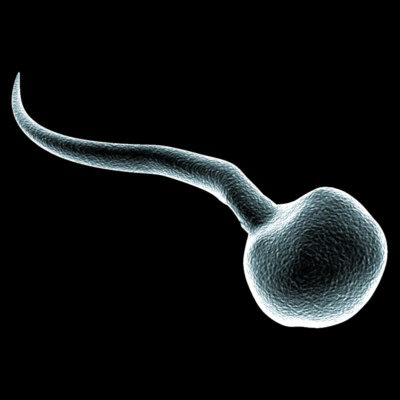
Sex does not mean the same thing as reproduction. Girls have a set number, 1 egg each month. Boys only get sperm cells when they hit puberty. The body will stop releasing eggs when the zygote forms. For fish all the time they fertilize the eggs outside the body. Fish do not have to have sex. The boy fish let all their sperm go at any time. Sperm cell has 50% and egg has 50% of chromosomes. there are 4 homologous pairs which is really 8 chromosomes. Homologous pairs are 2 chromosomes needed to code for the same trait.

Here is a link for a picture of a sperm cell:
http://saintzy.files.wordpress.com/2007/03/sperm-cell.jpg


Sperm cells are made by using meiosis.


Here is a link for a picture of meiosis:
http://dbscience3.wikispaces.com/file/view/meiosis-big.gif/63281204/meiosis-big.gif


VP-#4

Thursday, March 17, 2011


The homework that was due today is due tomorrow because a lot of people couldn't get to the link because they didn't have a plug in. So they should do it during homeroom or study hall. Then we talked about how paramecium replicate using mitosis. We also talked about the specific steps of mitosis. They are the chromosomes turn into chromtid. The centrosomes turn into centrioles and move to opposite sides of the cell. They then shoot out spindle fibers and they connect to the chromtid's centromere and they split them apart. Then the membrane pinches together and pull apart and become two new cells. Then we talked about our reproduction then we went through the process. Sex isn't reproduction. It is a method of delivery. The sperm and and egg have to be in the same place that's called fertilization. Zygote is what the cell is called when the egg and sperm are in the same cell. Eggs come from the ovaris and sperm comes from testicles.


T.G.

Wednesday, March 16, 2011

To start today two groups presented their slide shows. After that we reviewed the questions that we had to do in class yesterday with a partner. I learned that single celled organisms go through binary fission. During the review of the questions someone asked if there's male and female bacteria and immediatly he noticed that the answer was no. Mr. Finley showed us karyotypes which are pictures of our chromosomes. We also saw autosomes which carry almost all of our traits. There are 44 kinds and 22 pairs. For sex chromosomes if there's xx your a girl if there's xy your a boy. There are 46 chromosomes. 23 from your mom and 23 from your dad. There are 23 homologous pairs. In a chromosome one side is a chromatid and the other side is another chromatid. That's for x shaped chromosomes.

JM

Monday, March 14, 2011

Friday, March 11th (sorry this is a day late.... didnt know i had to blog)


Today, we got assigned a project on mitosis. we have to create a power point slide show with our tables about mitosis and the phases included in it. we were allowed to bring in our cell phones and take pictures of the phases of mitosis using post-its and 2 white boards. you would send the pictures to your email and download them onto the computer, then inserted into your slide. the slides had to cover mitosis of a fruit fly, with a picture and description of what happens in the phase, using your knowledge and notes. we had all period to work on the power point, plus some of Monday to work on it, depending on how much the average of the class had to finish. in this class, we had half the period for Monday to finish. then, we would have to present the slides for a group grade. my group finished with all of the information, but we still needed backgrounds, which wasn't too bad. overall, this class finished with most of our slides, and there weren't any major issues with downloading pictures and finding information. please go to mr. finley or ask someone at your table for extra help!!
if you weren't here on friday, so sorry i thought i was going on monday :(

-nm 4th post

Today, we finished our powerpoint presentation on the steps of mitosis for a fruit fly cell. Mitosis is the process in which a parent cell divides, or reproduces asexually to create two daughter cells or create a new cell. Some of the information that should be on your powerpoint is:
Phase 1 (Interphase): The chromatins in the nucleous replicate. The cell condenses. This one of the longest stages. Proteins are being produced.
Phase 2 (Prophase): The cell condenses. The chromatins turn into chromosomes. The nucleous begins to disappear. Centrosomes turn into centreols.
Phase 3 (Metaphase): The centreols make spindle fibers which attach to centromeres. The chromosomes line up. The nucleous is completely gone.
Phase 4 (Anaphase): The spindle fibers split the chromosomes. They pull to different ends of the cell.
Phase 5 (Telophase): The two nuclei form and the chromosomes unwind and turn back into chromatins.
Phase 6 ( Cytokinesis): When the cell splits into two daughter cells, there are now two nuclei. One in each cell. There is no more membrane binding the two cells together. They stay near eachother, but they are still two seperate cells.


Thursday, March 10, 2011


At first we discussed our answers for pg.97 in the textbook. This we did in our groups. Mr. Finley gave us until 12:30. Then after that Mr. Finely dicussed what we leard the last couple of days.He could not walk around the all the different groups,because he was teaching his own lesson. We had a discussion of what happens in prophase. The main thing that happens during prophase, is that the nucleus breaks down. Mr. Finley reminded us that there are alot of similar words, for example some are, Chromozone chromatid,chromotin. when a student got confused.
The three main things that happen during prophase is the chromatin turn into chromezones, the nucleus breaks down, and the centrosome become two centreolles and move to opposite parts of the cell. Each centreolle split the chromozone by shooting spindle fibers at the chromozone and pull it apart.When cells messd up in mitosis( this happens rarly) people can get cancer or toumers.
During Telaphase a new nucleus comes back, also chromozones turn back into chromatin. Then the cell membrane starts to strech. the starting of splitting happens in the very end of Telophase. The actual splitting happens during cytokenisis. Y.S


Wednesday, March 9, 2011

staions

Today we are continuing our stations. My group is at the station where we are looking at an onion root tip on a micriscope on the smartbored. Mr. Finley is talking about a cell reproducing. He is pionting to a cell to point iut the cell wall forming. Now he is showing us a cell that is starting in anaphase. When an amnimal cell divides it pinches and then split apart.
Now we are at a new station where we are on the computers on a website and taking notes. I am drawing a picture of the cell on the website.
Notes:
interphase: cells may appear inactive during this stage but they are quite the opposite. Its the longest period during which the DNA replicates.
Prophase:
During this stage the nucleus fades and cromatin condences into cromosomes.
BB

Tuesday, March 8, 2011

3/8/11 stations


Today we started class by taking out our lab sheets from yesterday. Mr. finley said then that we were going to be doing station work today. Our group first had to do station 1 which was completing questions in the textbook on page 97. Another group was at the smartboard with Mr. Finley, and the last group was online at cellsalive.com on the mitosis site. At station 1 the group went over some qustions about mitosis based on a graph with the amount of time the cell spends in each section. Some of the questions were like how long is the cell in interphase and how long is mitosis. Our group got done with all the multiple choice questions and then got to some open-ended ones about how to set up an experiment to test for mitosis while changing a ariable. We said that you could do one plant under high power light and another under low and a final one with no light.At the smart board with Mr. Finley we said that in the onion root cell we will see mitosis because the roots need to get water for the onion. We also said that the died parts in the cell are chromosomes that are seperating and that different cells can be in different stages but one cell can be inbetween two different stages. We said that in anaphase spindle fibers pull apart the chromosomes to make a new cell. We did not get to station 3 so check Tomorrows blog to see what happens on cells alive.com in stage 3.
I(n the picture above chromosomes are being seperated to make a new cell.

PH